Recirculating Aquaculture Systems
Rezirkulierende Aquakultursysteme erfordern eine stabile Strömungsdynamik, Sauerstoffregulierung, Denitrifikation, Energiebilanz und die Unterdrückung von Krankheitserregern. Wenn Sie in einem dieser Bereiche tätig sind, wählen Sie den entsprechenden Abschnitt unten aus.
Protein production:
hereRecirculating Aquaculture Systems require stable flow mechanics, oxygen control, denitrification, energy balance and pathogen suppression. If you work in one of these areas, choose the section below.
RAS facilities do not fail because of single components. They fail when flow, oxygen, energy, denitrification and hygiene drift in different directions.
Flow Mechanics & Hydraulics
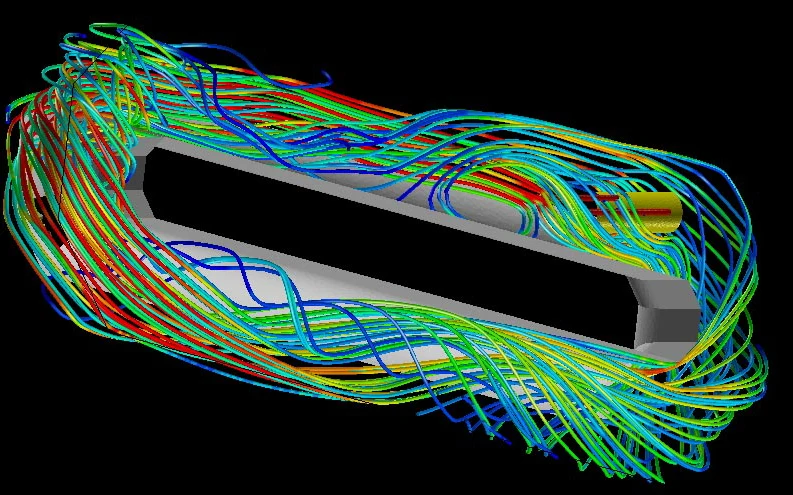
Circulation defines stress distribution in RAS. Shear zones, pump curves, pipe friction, turbulence pockets and dead‑water volumes determine how oxygen and load move through the system.
Oxygen Control & Stress
Dissolved oxygen is a stress regulator, not an accessory. Micro‑stress, hormone spikes, weight loss and fillet firmness are direct outputs of oxygen stability and pump‑induced stress.
Denitrification & Biofilm Systems
Nitrate drift is a time‑delayed failure chain. Controlled anaerobic corridors, biofilm thickness, carbon dosing and hydraulic bypass define whether denitrification stabilises or destabilises the system.
Energy Balance & Redundancy
Load distribution, pump redundancy, thermal balance and failure chains decide if a facility survives partial outages. Redundancy is drift suppression, not “backup”.
Pathogens, Keime & Water Hygiene
Pathogens follow flow vectors. Bio‑load, hygiene drift, contamination corridors, temperature pockets and filter bypass define how fast germs spread and where suppression must start.
Blockchain Cooling Chains
Cooling chains fail when temperature drift is not tracked. Blockchain‑based logging turns logistics and contamination vectors into verifiable sequences instead of assumptions.
Nutrition, FCR & Dry/Fresh Logic
FCR is metabolic load distribution, not a single efficiency number. Dry/fresh comparison, protein conversion and stress‑induced FCR spikes show whether feed is turned into stable output or into drift.
Work with RAS as a System
If you operate or design RAS facilities and need system‑level analysis instead of component discussions, you can use MOAT to map drift, bottlenecks and failure chains across flow, oxygen, energy and hygiene.
Go to MOAT procedures